
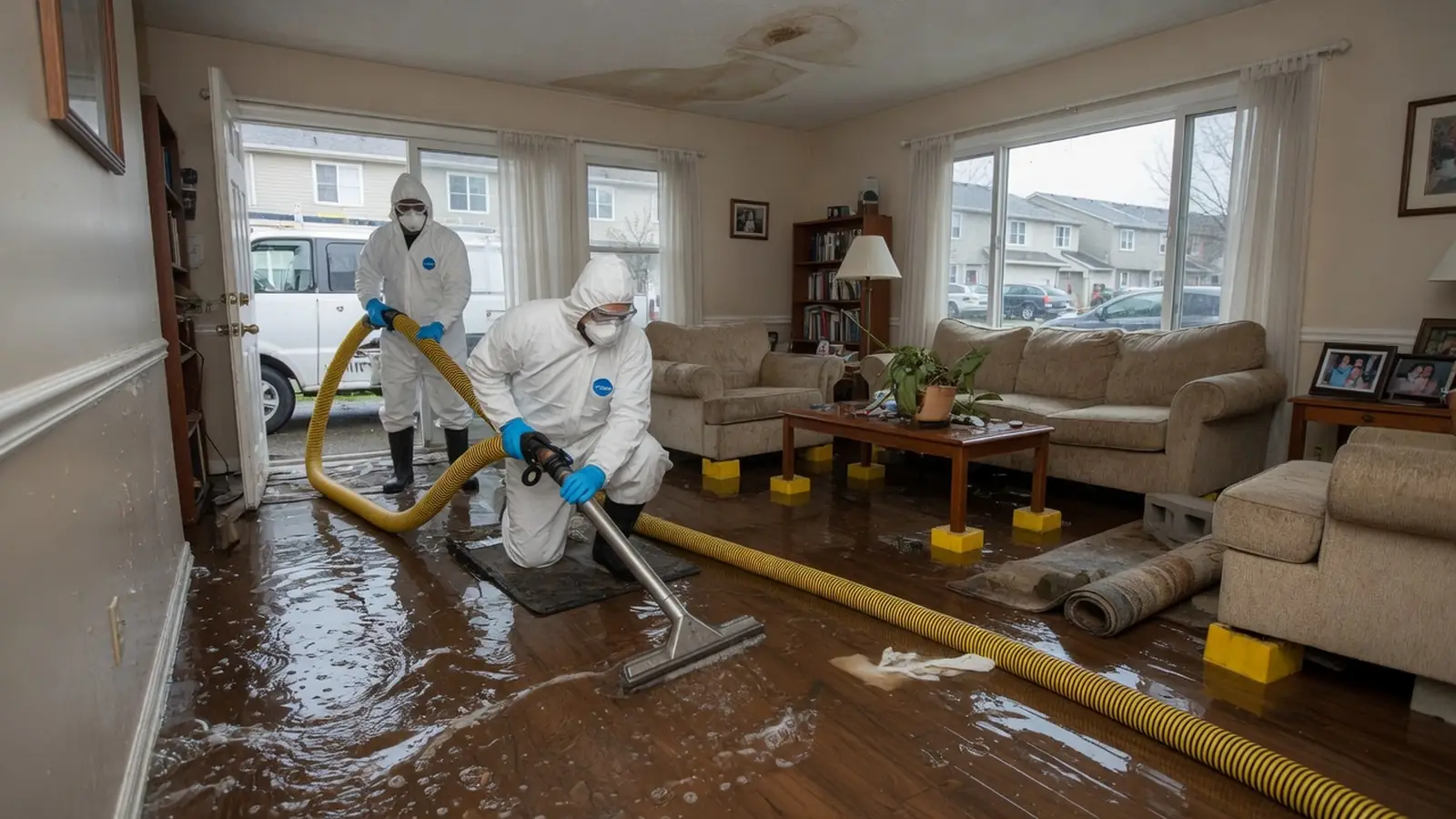
Emergency Water Damage Restoration Everett WA
When burst pipes or sudden floods strike regional properties, rapid structural drying prevents deep moisture migration into subflooring. Our dedicated team deploys industrial air movers and desiccant dehumidifiers within minutes to stabilize indoor humidity. We protect structural integrity while removing standing water from finished living spaces.
Ceiling dripping now? Call (425) 555-0122.
Decades Of Reliable Structural Drying
Our technicians bring seasoned structural drying expertise to established neighborhoods near Port Gardner and the Snohomish River waterfront.
About 27% of housing units in the local community (12,555 of 46,913) were built before 1960, the era of galvanized steel supply lines and cast iron drains that frequently suffer catastrophic seam splits.
About 10% of housing units in the surrounding neighborhoods (4,638 of 46,913) were built in the 1960s, overlapping the years aluminium branch wiring was installed, demanding stringent electrical safety protocols during standing water extraction.
About 28% of housing units across the service area (13,107 of 46,913) were built in the 1970s and 1980s, overlapping the years polybutylene supply piping was commonly installed, leading to sudden hidden pressurized line leaks.
About 65% of housing units in the municipal boundary (30,300 of 46,913) were built before 1980, the period when asbestos-containing materials and lead paint were still in use, requiring non-destructive containment drying whenever drywall or vinyl flooring is affected.
As homeowners often describe in local trade discussions, fungal growth on crawl space framing joists requires containment and thorough remediation before encapsulation to prevent airborne spore migration, which is why we meticulously inspect and dry out flooded crawl space substructures during every call.
We monitor moisture levels daily with calibrated thermal imaging sensors until every wooden stud and subfloor cavity reaches stable equilibrium moisture content.
Precision Drying In Four Proven Steps
Our rapid extraction and drying protocol targets the real sources of residential flooding across the Puget Sound basin. NOAA radar recorded 0 hail signatures within about 15 miles locally between 2021-2025 (2021: 0, 2022: 0, 2023: 0, 2024: 0, 2025: 0), confirming that regional structural moisture stems from relentless winter rainfall and aging pipe failures rather than hail punctures. The heaviest recent hail year around this regional zone was 2021, with 0 radar hail signatures inside a 15-mile radius, meaning property owners deal with groundwater saturation and plumbing breaks rather than storm-shattered roofs. When indoor flooding overwhelms a lower level, we provide comprehensive emergency basement flooding pump out solutions to halt rising moisture.
- Emergency Water Extraction And Containment. Our crew arrives with truck-mounted vacuum units to pump out standing water and set up physical containment barriers. A pattern echoed in public discussions is that chronic water intrusion in finished basements leaves homeowners deciding between interior trenching with sump pumps and disruptive exterior excavation, so our initial assessment pinpoints the exact ingress pathway before water wicks into finished drywall.
- Structural Moisture Mapping And Thermal Scanning. We deploy infrared cameras and non-penetrative moisture meters to map hidden moisture travel behind baseboards and under floorboards. Homeowners face immense structural damage and mitigation expenses when sump pumps fail to trigger during high water table events, making comprehensive moisture mapping critical for uncovering sub-slab saturation.
- Industrial Dehumidification And Air Movement. We position commercial low-grain refrigerant dehumidifiers and high-velocity axial air movers to generate balanced vortex evaporation. Continuous airflow pulls trapped moisture out of wall plates, sill beams, and floor joists without distorting dimensional lumber.
- Antimicrobial Treatment And Final Verification. Our specialists apply botanical antimicrobial washes to prevent microbial proliferation across organic building assemblies. We verify relative humidity, ambient temperature, and dry-standard moisture readings across all structural materials before removing equipment.
Certified Structural Drying And Containment
We adhere strictly to IICRC S500 standards for professional water damage restoration, never cutting corners on drying times or containment protocols. Community forums frequently highlight how inadequate roof ventilation coupled with elevated regional humidity causes widespread mold proliferation across attic sheathing and roof framing, reinforcing why thorough moisture balance is essential throughout the entire structure. Our crews combine immediate mechanical extraction with professional antimicrobial treatment and mold remediation to ensure subflooring and framing remain structurally sound and free from hidden secondary contamination.
Burst Pipe Water Extraction
Rapid response pumping and drying for pressurized supply line ruptures and frozen pipe breaks. We extract pooled water immediately and dry wall cavities using directed air drying systems to prevent structural deterioration.
Basement And Crawl Space Drying
Comprehensive groundwater removal and deep structural dehumidification for flooded subterranean foundations. We stabilize relative humidity and treat wet mudsills to protect foundation framing from rot.
Sewage And Graywater Mitigation
Safe biohazard extraction, sanitization, and disposal following municipal drain backups and fixture overflows. Our technicians sterilize contaminated porous materials using hospital-grade botanical disinfectants.
Dedicated Moisture Extraction And Mitigation Standards
Our approach centers on honest diagnostic assessment, immediate physical water extraction, and measured psychrometric drying. We monitor drying chambers daily with precision probes until structural assemblies meet baseline moisture criteria.
- 8Zip Codes Served
- 6Service Areas
- 3Services Offered
Local property owners rely on our emergency drying crews when unexpected flooding threatens their homes. Here is genuine feedback regarding our response times, containment protocols, and drying performance.
“Six months after our upstairs supply line burst, our hardwood floors remain completely flat with zero cupping or mold odor. The crew dried the subfloor from underneath using specialized floor mat systems rather than tearing everything out. We had our air quality tested independently last week and the readings came back spotless.”
Marcus T.
“Caring for my elderly mother with limited mobility meant we could not have noisy equipment blocking main hallways or power cords creating trip hazards. The technicians routed every suction hose neatly along baseboards and set up low-profile air movers that kept her bedroom quiet and accessible. Their thoughtful coordination prevented an emergency stay at an assisted living facility.”
Brenda K.
“Another contractor gave us a cheaper quote that only included pulling up the carpet and leaving two household fans running for a weekend. This company explained why that approach would trap moisture inside the sill plates and cause hidden drywall decay down the road. Paying for their industrial dehumidifiers and daily moisture monitoring saved us from a massive mold headache later.”
Devon R.
“When water flooded our finished basement ceiling, the team immediately recognized that our older acoustic tiles required proper hazardous material sampling before any demolition occurred. They coordinated the certified lab test protocol seamlessly and kept the containment zone sealed under negative air until clear documentation was in hand. That strict compliance gave our insurance adjuster zero grounds to dispute our claim.”
Eileen M.
Frequently Asked Questions
How quickly does emergency water damage restoration need to begin?
Water extraction and structural drying must start within 24 to 48 hours to prevent microbial growth and permanent warping of framing lumber. Rapid response halts water wicking through drywall and subflooring before porous materials require complete structural tear-out.
How long does the structural drying process typically take?
Complete structural drying typically takes between three to five days depending on material saturation, ambient humidity, and airflow. Dense hardwoods and insulated wall cavities may require additional days of targeted heat drying to reach certified dry standards.
Does homeowner insurance usually cover emergency water mitigation?
Most standard policies cover sudden and accidental water discharges such as burst supply pipes or sudden appliance supply line failures. Gradual leaks or unresolved groundwater flooding often require specialized policy endorsements or separate flood insurance coverage.
What safety hazards exist in homes built before 1980 during water mitigation?
Older structures built before 1980 frequently contain asbestos insulation or lead paint that require contained non-destructive drying. Demolishing wet surfaces without proper testing risks releasing toxic airborne fibers into living areas during extraction operations.
How do technicians verify that a building is completely dry?
Technicians verify dryness using calibrated moisture meters and infrared thermal imaging cameras against dry-standard control points. Equipment remains operating until deep structural readings match baseline numbers recorded from unaffected areas of the building.