
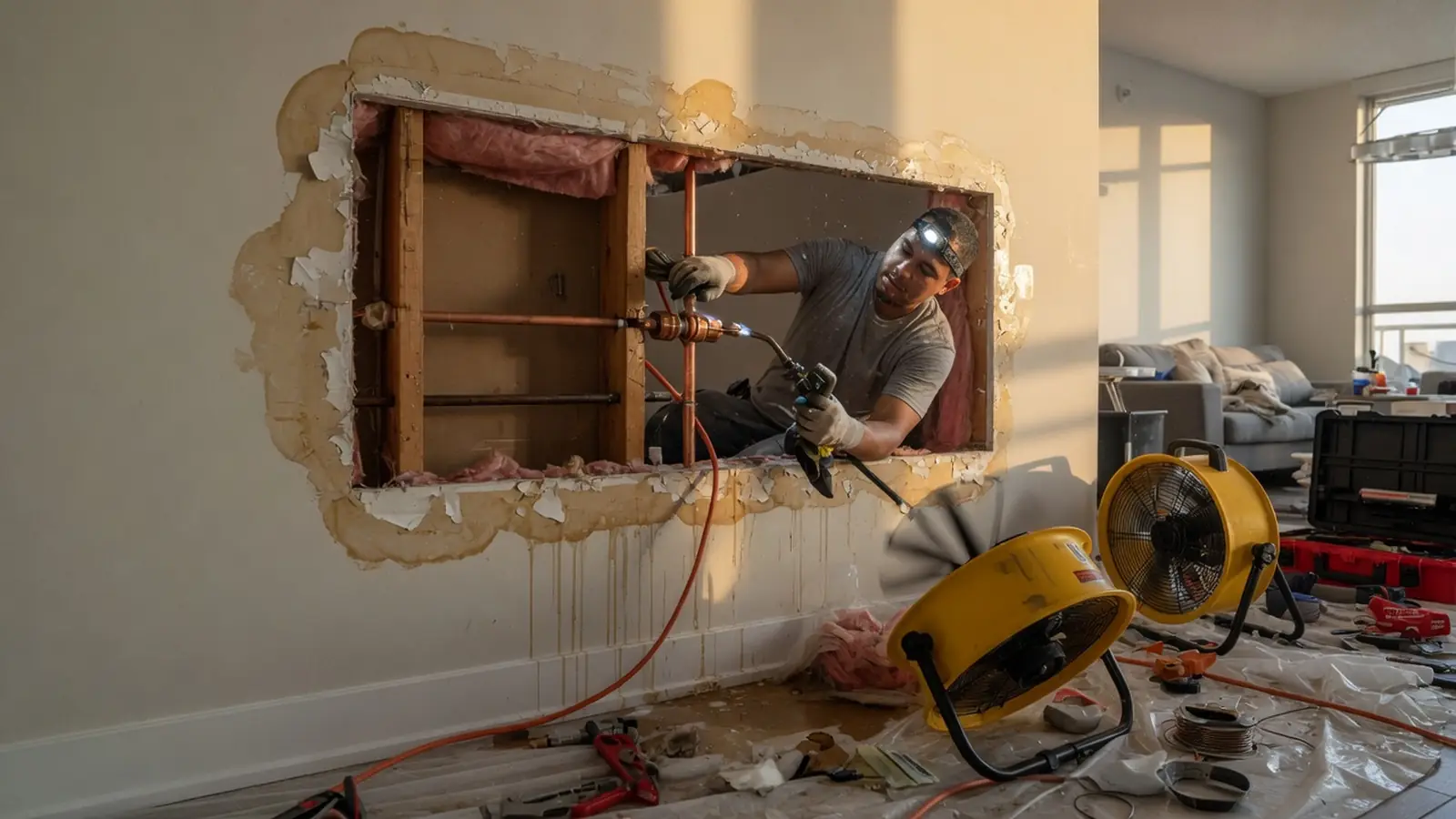
Everett Basement Flooding
When severe river overflow and saturated valley soils submerge access roads and flood residential properties during regional heavy rain events, rapid structural intervention protects your sub-grade investment. Our dedicated technicians deploy high-volume extraction units and commercial dehumidifiers to stabilize moisture levels promptly.
Call (425) 555-0122 if it's actively dripping.
Dedicated Moisture Extraction
Our crew delivers comprehensive 24-hour emergency water damage restoration for sub-grade living spaces.
We understand how heavy coastal rain and high water tables along the Snohomish River valley compromise subterranean masonry.
Our technicians combine heavy-duty submersible extraction with penetrating thermal imaging to identify hidden moisture trapped behind finished baseboards.
Every project concludes with digital hygrometer verification and complete antimicrobial sanitization of all exposed concrete slabs.
We work directly alongside your insurance adjuster to ensure thorough structural drying records streamline your claim without delays.
Our Step-by-Step Flooding Recovery Protocol
A pattern echoed in public discussions is that sudden mechanical pump failure leads to widespread standing water in finished basements, saturating drywall and requiring structural drying. We follow a systematic restoration protocol designed to mitigate moisture migration quickly.
- Emergency Pumping And Electrical Isolation. Homeowners often describe how tripped electrical breakers shut off sump pumps during heavy overnight downpours, resulting in rapid, deep basement flooding. Our first step isolates power hazards, restores auxiliary pumping capacity, and assesses floodwater depth across affected floor plates.
- Water Extraction And Crawl Space Clearance. We remove bulk standing water utilizing submersible pumps and truck-mounted vacuum extractors. When subsurface water pools under subfloors, learn how our specialists extract standing crawl space water before rot sets into joists.
- Moisture Mapping And Porous Material Handling. Property owners frequently ask whether water-damaged basement carpeting and padding be dried in place, or does stormwater intrusion require total pad replacement. We inspect contamination levels, safely extracting clean water from salvageable textiles while stripping ruined underlayment down to bare concrete.
- Dehumidification And Hydrostatic Protection. Because high ground water tables exert continuous hydrostatic pressure against basement foundations, driving groundwater seepage during heavy rainfall, long-term containment demands resilient vapor barriers and sealed masonry joints.
Our Structural Drying And Safety Standard
Category 1 clean water standing on porous materials degrades into contaminated Category 2 gray water within 48 hours as bacteria multiply. Our prompt mitigation prevents environmental degradation; explore our complete certified mold remediation protocols to protect indoor air quality.
Perimeter Trenching And Sump Repair
Chronic water intrusion in finished basements leaves homeowners deciding between interior trenching with sump pumps and disruptive exterior excavation. We install perimeter capture basins and dual submersible pumps that redirect moisture away from finished living spaces before pooling occurs.
Structural Cavity And Drywall Drying
Homeowners face immense structural damage and mitigation expenses when sump pumps fail to trigger during high water table events. We deploy truck-mounted extractors and inject drying air behind perimeter baseboards to save structural framing.
Vertical Moisture Path Mitigation
In older Pacific Northwest properties, balloon frame construction allows upper-floor leaks to bypass floor plates and channel water down continuous wall cavities, flooding lower levels rapidly. We utilize thermal imaging to trace vertical moisture pathways behind plaster and drywall.
Our Commitment To Basement Restoration Standards
We bring structured water extraction, industrial dehumidification, and moisture mapping to every flooded basement. Our focus remains on preventing structural deterioration and microbial growth through verified drying protocols.
- 12Zip Codes Served
- 6Service Areas
- 3Services Offered
Read genuine feedback from local property owners who relied on our rapid response, detailed structural drying, and clear communication when unexpected basement flooding threatened their lower levels.
“Waking up at two on a Sunday morning to ankle-deep water by the water heater was terrifying. The crew answered on the second ring, arrived within forty minutes with extraction gear, and had the pooling contained before dawn. Their swift intervention saved our finished baseboards from permanent warping.”
Marcus G.
“Every single evening before packing up, the crew vacuumed the tracking dust and swept the entryway clean. They stacked their air movers neatly against the perimeter so our family could still reach the laundry area safely. You could hardly tell heavy industrial drying equipment was running downstairs.”
Elena R.
“I never had to reach out once for an update during the four days of drying. The team sent morning moisture meter readings and timestamped photos directly to my phone before I even thought to ask. Having clear documentation made coordinating with our adjuster completely painless.”
Darren K.
“Instead of pushing to gut all the drywall, the crew explained how preserving the upper sections and replacing only the bottom two feet with mold-resistant materials would protect our budget. They took the time to show us why closed-cell subfloor underlayment prevents future moisture wicking. That practical advice saved us thousands on the reconstruction.”
Sylvia M.
Frequently Asked Questions
Can water-damaged basement carpeting and padding be dried in place, or does stormwater intrusion require total pad replacement?
Stormwater intrusion requires full carpet pad replacement, while clean water allows technicians to dry carpets in place if treated within 48 hours. Because porous carpet padding traps silt and rapid bacterial growth, removing the pad while salvaging synthetic carpet fibers preserves foundation hygiene.
Why does clean basement water become hazardous if left standing?
Clean water degrades into contaminated gray water within 48 hours when contacting drywall and subfloors as indoor bacteria rapidly multiply. This transition escalates restoration protocols from standard moisture extraction to antimicrobial sanitation and structural containment.
What causes groundwater to seep through solid basement foundations?
Elevated water tables exert continuous hydrostatic pressure against concrete masonry walls, pushing groundwater through microfissures. Prolonged Pacific Northwest precipitation saturates surrounding soils, creating subterranean forces that compromise unsealed basement perimeters.
How do power outages and tripped breakers trigger basement floods?
Severe downpours overload drainage circuits, tripping breakers and leaving basements defenseless against rising high water table surges. Without immediate auxiliary battery backups or manual resets, water accumulates rapidly, threatening structural wall plates and mechanical equipment.
How do homeowners choose between interior trenching and excavation?
Interior perimeter trenching manages chronic water intrusion affordably, whereas exterior excavation stops hydrostatic entry from outside. Internal drainage systems pair with dedicated sump pits to redirect seepage without the major disruption of digging up exterior landscaping.